Antimicrobial Resistance Genes
The Fate and Transport of Antimicrobial Resistance in Flowing Waters project is a USDA-funded effort (Grant #1024735) to bring light to an issue that is heavily impactful to the world.
Antimicrobial Resistance (AMR) refers to the variety of adaptation mechanisms that are used by microorganisms to survive an encounter with antibiotics or other toxic substances.
What this translates to is that bacteria, for instance, can evolve to resist certain antibiotics and become more recalcitrant to common treatments. While this is a naturally occurring phenomenon, the increase in consumption of antibiotics by humans and animals has resulted in bacteria having to evolve much quicker than they naturally would have, building up their resistance to antibiotics that many people take every day.
This project was built as an open educational resource (OER) to provide an interactive experience that places you into a retro game simulation where you’ll learn alongside some of our characters to discover what AMR is, how it works, where it can be found, and what Notre Dame and the rest of the world are doing to learn more about this global health phenomenon. Hit the "Start" button below to review the interactive OER:

AMR Research at Notre Dame
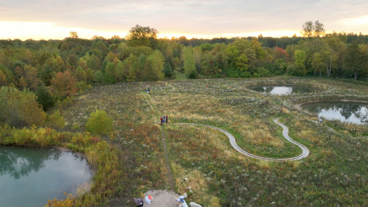
The University of Notre Dame is on the forefront of research on AMR. Click the link below, you’ll be able to view a few comprehensive videos that explore what studying AMR looks like, what Notre Dame is doing in their research related to AMR, and what we have yet to learn about AMR. They will help you to understand where we’re going with research in this field and what that means for the future of AMR.

Repository
We have compiled a list of resources that were used to help develop this material, along with the links to the videos within the above interactive experience. Click the link below to learn more.