- Home ›
- News ›
- ND-GAIN
News » ND-GAIN
In recent years, billions of dollars have been pledged worldwide for climate adaptation: taking action to prepare for and adjust to the current and projected impacts of climate change. But key questions remain on where and how that funding should be spent. As a pioneer in tools that support the...
To better understand what drives resilience, the Notre Dame Global Adaptation Initiative (ND-GAIN) undertook a two-stage study focused on five countries: Guatemala, Honduras, Nicaragua, Colombia, and Haiti. The goal was to identify what strengthens a country’s adaptive capacity, what relevant measurements already exist, and where gaps remain.
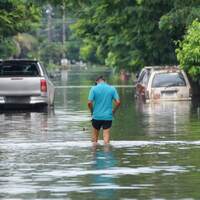
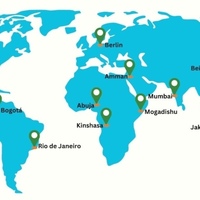
As the reality of a changing global climate manifests in severe flooding and intensifying droughts, the risk and preparedness for these extreme weather events is distributed unevenly worldwide.
The Notre Dame Global Adaptation Initiative (ND-GAIN) is proud to release a new Adaptation Brief in its ongoing series of highlighting what works in climate interventions across the globe. The latest ND-GAIN Adaptation Brief highlights the Supporting…
The lastest update to the University of Notre Dame’s Global Adaptation Initiative's (ND-GAIN) Country Index is now live. Free and open-source, the ND-GAIN Country Index ranks 185 nations according…
Jakarta, Indonesia, faces a paradox. Its economy and population are soaring, but the city itself is sinking. Excessive groundwater use is causing land subsidence of up to ten inches annually. Experts warn that by 2050, the subsidence, combined with rising sea levels and extreme weather, could leave a third of the...
A recent Supreme Court decision to block a federal rule curbing interstate air pollution further complicates efforts to reduce emissions and adds to an already disproportionate burden on “downwind” states, according to researchers at the University of Notre Dame. “Toxic air pollution is really…
Building on its pioneering Country Index, which ranks climate vulnerability and readiness across more than 180 countries, the University of Notre Dame’s Global Adaptation Initiative (ND-GAIN) will soon begin tracking the progress of such efforts in cities around the world. Based on evolving climate vulnerability and adaptation research, the Global...
The Environmental Change Initiative will host a Halloween-themed Science Sunday event from 1 to 4 p.m. Sunday (Oct. 29) at the Notre Dame Linked Experimental Ecosystem Facility (ND-LEEF) at St. Patrick’s County Park in South Bend.
Updated annually, ND-GAIN’s Country Index quantifies the climate vulnerability and readiness of more than 180 countries by aggregating 45 core indicators over 20 years.
A team of civil and environmental engineers at the University of Notre Dame is racing against time to create a new framework for community recovery from natural disasters, educate homeowners on risks and encourage incentives for climate-resilient homes before the next extreme event hits.
This summer, a team of undergraduate researchers from the University of Notre Dame and Dublin City University (DCU) joined together to analyze a subwatershed in the St. Joseph River Basin to better understand barriers and opportunities…
Even the most prepared countries need to focus more on climate change, according to the University of Notre Dame’s Global Adaptation Initiative (ND-GAIN) Country Index. The annual study—which measures how…
In the annual update of the University of Notre Dame’s Global Adaptation Initiative Country Index data sources for some vulnerability indicators have changed, including food dependency and urban concentration.
Danielle Wood, associate director for research in the Center for Civic Innovation at the University of Notre Dame, has been named project director of the Notre Dame Global Adaptation Initiative (ND-GAIN), a key program of the Notre Dame Environmental Change Initiative (ND-ECI).
For the fourth year in a row, the United States has ranked 15th in the University of Notre Dame’s Global Adaptation Initiative (ND-GAIN) Country Index.
The Urban Adaptation Assessment is an open-source, free measurement and analysis tool that explores a city’s ability to adapt and readiness for adaptation to climate change.
Brebeck has pursued her passion in word and deed as an intern for the Notre Dame Global Adaptation Initiative (ND-GAIN). With three other interns, she’s helping to build an online tool known as the Urban Adaptation Assessment (UAA).
If there is a formula for how an internship should strike a balance between too little boss oversight and too much over-your-shoulder scrutiny, then Matt Lupo may have found it. “It should be structured enough to tell you what to do,” said Lupo, of his internship with the Notre…
Just because he’s an Environmental Science major doesn’t mean that Jorge Daura likes dirt. Daura worked for a time in a Notre Dame lab where he analyzed soil samples, yet it wasn’t for him. …
To understand the pivotal role that Big Data plays in the career dreams of a ND-GAIN intern, consider what Carolyn Yvellez wants for her next birthday: a four-terabyte hard drive. It’s an essential computing tool should you want to store climate data for 278 large…
As island nations prepare for a lead role in the 23rd annual Conference of Parties (COP23) in Bonn, Germany, Nov. 6-17, the latest data released by the Notre Dame Global Adaptation Initiative (ND-GAIN) shows that small island states face increasing challenges to address the impact of climate change.
Kaitlin Harris serves as the Project Manager of the Urban Adaptation Assessment with the Notre Dame Global Adaptation Initiative (ND-GAIN). She recently visited Bonn, Germany, as a representative of an observer organization, in preparation for COP 23 Conference in November. She spoke about her experience…
“But how can you be sure that climate change is caused by humans?” …
When Hurricane Matthew hit Haiti in October 2016, Kellogg Faculty Fellows Tracy Kijewski-Correa and Alexandros Taflanidis,…
By Chen Chen, Research Scientist, Notre Dame Global Adaptation Initiative (ND-GAIN) Funded by a two-year Partnership Development Grant from Canadian Social Sciences and Humanities Research Council, McGill…
Words are confusing, often wrought with varying connotations and intangible ideas. But no matter what they’re called, floods and droughts are concrete events, which can be fought with concrete action. The New York Times article, “In…
The top five countries showing the biggest amount of improvement in preparedness over the last year were Ghana, Solomon Islands, Cape Verde, Sri Lanka and Myanmar.
As climate changes in the decades ahead, nations all over the world will invest billions to make themselves more resilient to rising sea levels, hurricanes, droughts, floods and heat waves.