ND-LEEF

Notre Dame Linked Experimental Ecosystem Facility at St. Patrick's County Park

ND Leef

Layout plan

Webcam

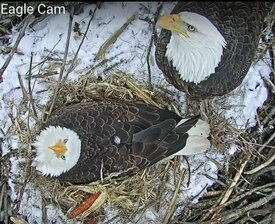
Live View (Updated Hourly)


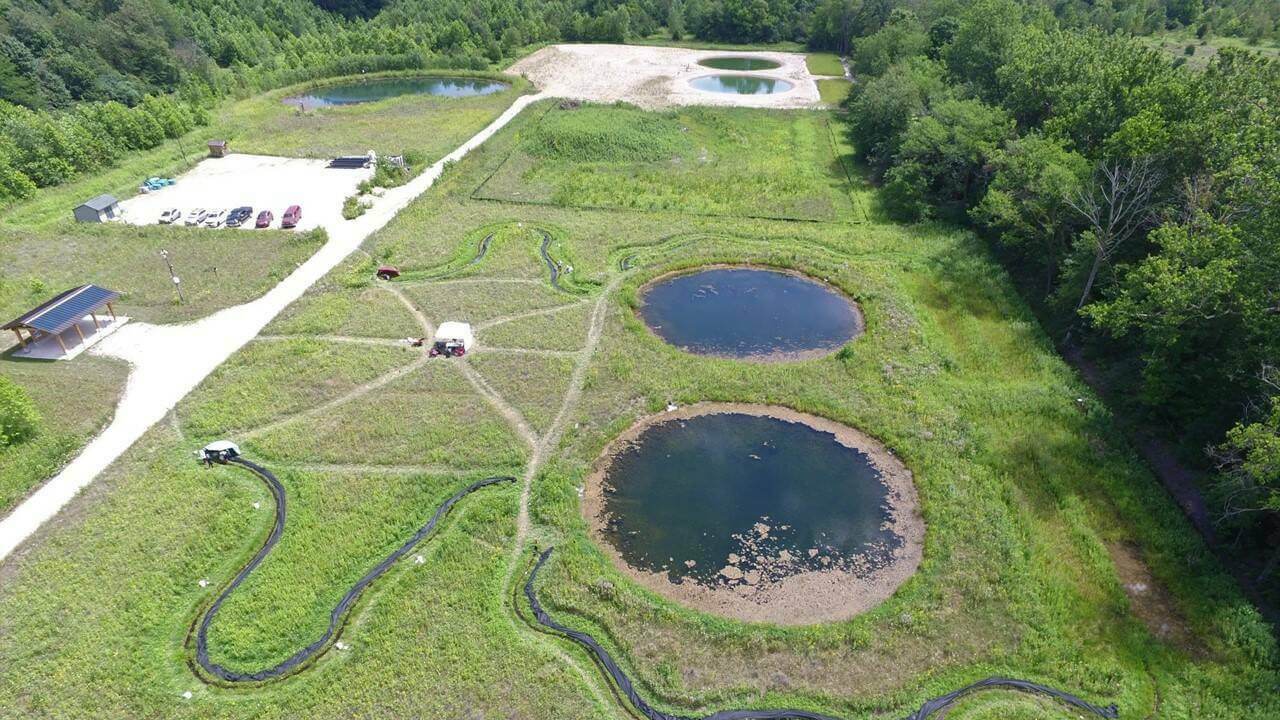
Working in a laboratory provides scientists with a predictable and controlled setting for conducting experiments. But in the environmental sciences eventually many of those experiments need to graduate to the uncontrolled and unpredictable environment of the field—a transition that can be challenging for both the scientist and the science. To help bridge this gap between the lab and the field, the University of Notre Dame’s Environmental Change Initiative (ND-ECI) is constructing a globally unique $1 million research facility that will be home to two constructed experimental watersheds, each consisting of an interconnected pond, stream and wetland. Both of these experimental watersheds are roughly the length and width of a football field and they will be located five miles north of campus on six acres of land within St. Patrick’s County Park. These artificial watersheds will allow scientists to conduct “field experiments” in a more controlled environmental setting than nature itself can provide, thereby helping to bridge the gap that has traditionally existed between the lab and the field. This new research site is known as the Notre Dame Linked Experimental Ecosystem Facility at St. Patrick’s County Park, or ND-LEEF for short.

parks logo

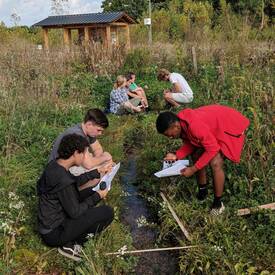
ND-LEEF is born out of a close partnership with the Park that will provide an unrivaled opportunity for scientific and environmental outreach to regional school groups and other park visitors from South Bend, St. Joseph County, and surrounding communities. What’s more, because the entire site will be wired with an extensive embedded sensor network, school groups, the general public, and collaborating scientists will be able to follow the research in real time via the Internet from anywhere in the world. In addition, these real-time data will allow educators at all levels to provide follow-up on ecological classroom exercises for weeks or even months after a field trip to ND-LEEF is complete.

While other universities and government agencies have experimental research facilities containing multiple small ponds or artificial streams, we believe ND-LEEF is globally unique because the pond, stream and wetland in each watershed are connected—an experimental research design that is intended to mimic nature. The connected configuration of these watersheds is especially important when investigating issues related to environmental change, which often cascade through several ecosystem types.  What’s more, the streams, ponds and wetlands at ND-LEEF can also be disconnected from one another for a given experiment, providing scientists with maximum flexibility in designing research projects. In addition to the linked watershed units, ND-LEEF will also include a large area dedicated to terrestrial ecological research as well as space for smaller scale mesocosm experiments.

_dsc4613

In addition to the close partnership with the Park, ND-LEEF represents a multidisciplinary collaboration between the Notre Dame College of Science, the College of Engineering and the School of Architecture. Groundbreaking for the facility occurred on June 15, 2012, and construction is expected to be completed by Fall 2012. The first research experiments at ND-LEEF should begin during Spring 2013.


ND-LEEF Contacts:

Professor Jennifer Tank, Director (574) 631-3976

Brett Peters, Assistant Director (574) 367-7621

Professor Aimee Buccellato, School of Architecture (574) 631-1431

Peter Annin, ECI Managing Director (574) 807-9322


News

Outdoor Elements: Science Solving Problems

February 27, 2013 • Author: Outdoor Elements, WNIT • Categories: Land Use and Water Quality and ND-LEEF

Members of the ND-LEEF team were featured on WNIT's "Outdoor Elements" episode "Science Solving Problems." The episode featured a behind-the-scenes segment on the building of ND-LEEF, featuring Director Jennifer Tank and Assistant Director Brett Peters. Architecture Professor Aimmee Buccellato was also featured in a segment called "Trash to Treasure: Recleaming Pine Beetle Damaged Wood."

Jennifer Tank receives Leopold Leadership Fellowship

February 14, 2013 • Author: William G. Gilroy • Categories: Land Use and Water Quality and ND-LEEF


Jennifer Tank

Jennifer Tank, Ludmilla F., Stephen J., and Robert T. Galla Professor of Biological Sciences at the University of Notre Dame and an international authority on the cycling of nutrients in freshwater ecosystems, has been named a 2013 Leopold Leadership Fellow

Jennifer Tank receives Leopold Leadership Fellowship

February 05, 2013 • Author: Stephanie Healey, Notre Dame College of Science • Categories: Land Use and Water Quality and ND-LEEF

jennifer_tank_4

Jennifer Tank, the Ludmilla F., Stephen J., and Robert T. Galla Professor of Biological Sciences, has been named a Leopold Leadership Fellow. The Leopold Leadership Program was founded in 1998 by the Stanford Woods Institute at Stanford University to fill a critical gap in environmental decision making. The goal of the program is to further the development of sustainable policies and practices by getting scientific knowledge into the hands of government, nonprofit, business leaders, and the public.

On the Trail: Learn about eco-research at St. Pat's

February 03, 2013 • Author: Joseph Dits, South Bend Tribune • Categories: ND-LEEF

A sign

A sign along Laurel Road at St. Patrick¿s County Park points out the work that is ongoing to create the University of Notre Dame¿s LEEF project, or Linked Experimental Ecosystem Facility. (February

ND-LEEF: Out of the Laboratory, Into the Environment

August 29, 2012 • Author: Notre Dame News (YouTube Video) • Categories: ND-LEEF

A groundbreaking ceremony was held June 15, 2012 for the Notre Dame Linked Experimental Ecosystem Facility (ND LEEF), located at St. Patrick's County Park in St. Joseph County, Indiana. The field-based environmental research facility will allow Notre Dame scientists, graduate and undergraduate researchers, visiting scholars and other academic institutions to study the interrelationships of land, water and wetland ecologies in the face of environmental change. http://ndleef.nd.edu

Read All ND-LEEF News