
I first decided to study global affairs because I saw so many different intersecting problems that are global in scale. As someone who enjoys outdoor recreation, I see the effects of climate change on local hikes, but I also know that the effects of climate change can also be felt all over the world, from the beaches of the Maldives to the savanna of the Sahel. I also feel the economic and public health effects of events from halfway around the world, from the war in Ukraine affecting gas prices to a novel disease that started in Wuhan, China causing my high school to shut down for most of my senior year. I used to think that problems affecting the entire globe required one global response. But what I have learned at the Keough School was the exact opposite.
Throughout my academic journey, I have learned that one-size-fits-all approaches to solving global problems are not effective and that a “democracy of voices,” as Notre Dame historian Julia Thomas describes it, is the ideal way to address global issues. My studies have led me to multiple thematic areas from the environment to migration to development. I have also learned much about a few geographic areas including Europe, especially Italy, and sub-Saharan Africa. In our diverse world, a one-size-fits-all solution to any global problem cannot account for all the intricacies of human cultures. For an intervention to be most effective it must be culturally specific, respecting the autonomy and human dignity of the people involved.
Climate policy needs local approaches
The need for culturally specific solutions is very clear in environmental policy. Although the scientific community acknowledges the dangers of climate change, many scientists propose that “a deep transformation based on a fundamental reorientation of human values, equity, behaviors, institutions, economies and technologies is required” to prevent the Earth system from surpassing tipping points. However, all of those transformations do not account for the diversity of human cultures, making it impossible to agree on any reorientation of values that will satisfy all peoples.
That tension is being realized with the current debates on climate reparations and the need for differentiated responsibilities in the fight against climate change. Although some voices call for an overarching response to climate change, it is impossible to get the Global North and the Global South on the same page. Not having had the opportunities to develop economically, the Global South insists that climate policy cannot come at the expense of economic growth. It is also true that the Global South faces the brunt of the negative effects of climate change while the Global North caused the climate crisis with its industrialization. A global intervention to address climate change would not be fair to the countries of the Global South. Because of that, it is now generally agreed that the Global South should contribute at a different level than the Global North in addressing climate change, and negotiations at the COP27 summit resulted in a loss-and-damage fund for the Global South.
Blanket approaches to immigration don’t work
The need for locally specific policies is also evident in immigration policy. When I participated in the Serving (in) Europe program in the summer of 2023, I spent time with asylum seekers in Milan, Italy, where I learned that Italian attitudes about identity and immigration are vastly different than those of the United States. I have argued that increased immigration will benefit Italy in the long run, but it is clear that Italians do not want to welcome more migrants and that many migrants escaping war and persecution would rather make their way to other countries like Germany. With that in mind, it is clear that the current international agreements concerning refugees and asylum seekers are not sufficient.

While accompanying asylum seekers in Milan, I learned about the negative effects of a blanket approach like the Dublin Regulation, the current convention regarding refugees and asylum seekers in Europe. The regulation states that refugees must apply for asylum in the first safe country that they reach. It applies to all European Union states as well as a few other states in the European community, without regard for states’ capacities. It puts Mediterranean states such as Italy, Greece and Spain in a difficult position because most entrants to Europe reach those places first. Many migrants do want to eventually go to places like Germany and Sweden, where much of the population does wish to welcome more migrants. Repealing the Dublin Regulation would be a win-win for all parties involved, as states like Italy and Greece do not have the capacity to handle the influx of migrants while states like Germany are open to welcoming more migrants. It would also allow migrants to choose a place to settle in the long term, relieving the stress on gateway countries along the Mediterranean.
Lessons from southern Italy
My travels in Italy gave me further insights into the tension between universal and local solutions. I returned to Italy in the spring of 2024 for a semester in Rome. Having already visited much of northern Italy when I was in Milan, I sought to experience the southern half of Italy. One weekend, my friends and I took a train down to Calabria, the “toe” of Italy, and embarked on a forty-mile hike across the peninsula, from the Ionian Sea to the Tyrrhenian Sea. For two nights, we ate food sourced from local farms and conversed with the locals, learning about their simple lifestyle.
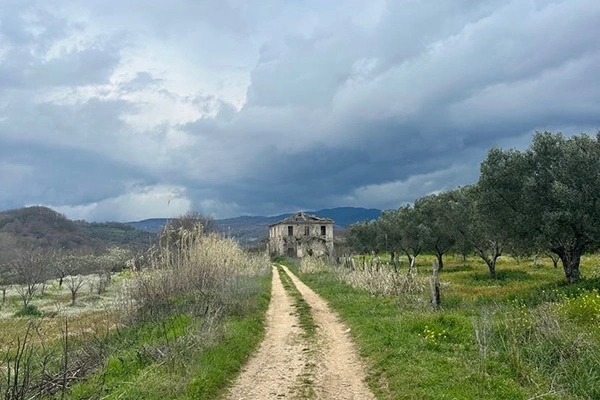
Since the Fascist era of the 1930s, the Italian government has been trying to industrialize southern Italy, a region some describe derogatorily as backwards and underdeveloped. Even today, southern Italy is less economically vibrant than northern Italy and depends largely on tourism and agriculture. During the 1950s, the Italian government embarked on a big development push, creating the Cassa per il Mezzogiorno (Southern Development Fund) to fund new industries in southern Italy. My journey across Calabria showed me that many ordinary Italians in mountain villages did not benefit from the fund. The development program was imposed on southern Italy by government officials largely from northern Italy, which has more power politically than the South. To me, this scenario provided additional evidence that problems are properly diagnosed through an on-the-ground understanding of local contexts.
My four years at Notre Dame have led me to consider best practices when addressing global problems. I no longer think that any one overarching solution is the answer. Instead, a deep understanding of local cultures and contexts is needed to fully craft the best possible solutions.
Bryan Fok is a Notre Dame senior who is majoring in global affairs and history and earning a minor in Italian.
Originally published by at keough.nd.edu on February 17, 2025.